
Being a horror fan is hard work sometimes. The older I get, the harder it becomes. We horror fans have voracious appetites, and every movie we add to our "watched" lists makes it that much harder to find the next one. The pool dwindles. We end up exploring oddly specific subgenres out of desperation, feeling all the while that there truly is nothing new under the sun. The law of diminishing returns kicks in - previously unwatched content isn't necessarily good content. In fact, if a movie is any good it's almost a lock that we've already seen it. We live for the occasional unheralded gem, the odd little surprise that somehow previously escaped notice.
When we unearth one of these buried treasures, we're obliged to share with others in our community, other horror junkies jonesing for their next fix. I'm pretty sure that's how cult movies are born. I submit for your consideration the late Paul Bartel's feature directorial debut,
Private Parts (1972).
I became a big fan of the Big Lots DVD dump bins a few years ago while enduring some nasty medical problems that left me perpetually broke and frequently homebound. I'd previously been one of those guys who regularly burned through piles of money on new DVD releases, and I simply didn't have the finances to keep doing that. Movies from the dump bins were only three dollars a pop, and they satisfied my compulsion to buy new DVDs without breaking the bank. Admittedly, though, my excavations frequently yielded pretty sorry results. They also often encouraged me to sample titles I might've otherwise passed by, perfectly worthwhile titles that had found their way to the dump bins simply because their availability outstripped consumer demand.
 |
| The lovely young Ayn Ruymen as Cheryl Stratton |
I'd never even heard of
Private Parts prior to finding it in a dump bin, and that made me wary right off the bat. Most of the titles I dug from the bins I at least had an awareness of. This was completely unknown to me. I'd recently fished out a copy of Paul Bartel's
Eating Raoul (1982), probably his most critically lauded work as a director, and I'd been underwhelmed. It was broad and silly. Had the pickings not been slim that day, I probably would
not have given
Private Parts a shot. After watching it, I was perplexed as to how I'd never heard mention of it before because I was delighted by what I found.
I should pause here to make clear that
Private Parts isn't a game changer. It's an odd, funky, and morbidly funny exercise in weirdness. It's at once familiar and unique. It brings to mind the movies of Frank Henenlotter (
Basket Case,
Brain Damage) in its casual, good-natured sleaziness. I suspect it was a hard movie to market, and perhaps that's why it fell through the cracks.
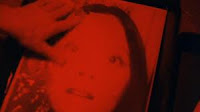 |
| Developing Cheryl in the basement darkroom |
Private Parts tells the story of teenage runaway Cheryl Stratton (Ayn Ruymen) who finds herself homeless in Los Angeles after she quarrels with her roommate. She winds up in a skid-row hotel run by her peculiar, morally rigid Aunt Martha (Lucille Benson) and populated by an assortment of loonies. One odd and reclusive tenant, a photographer named George (John Ventantonio), takes a rather unwholesome interest in Cheryl. Then the bodies start piling up, and Cheryl soon realizes why Aunt Martha is so uptight, George is so weird, and everyone else is so dead. To say more of the plot would ruin the fun.
 |
| George's "significant other" in an intimate moment |
Private Parts possesses that special "pushing the envelope" vibe peculiar to movies from the 1970s, and it boasts at least one showstopping set piece involving a blow up doll, a syringe, and an unsavory exchange of bodily fluids that's guaranteed to make even jaded horror fans squirm a little. It's an uncomfortable viewing experience that lingers in the mind. The movie also paints an especially grotty and lived in picture of L.A. that provides a strong sense of time and place. Aunt Martha's squalid, creepy old King Edward Hotel is a character itself - a sad, dilapidated affair that still hints at the fabulous showplace it undoubtedly once was.
 |
| Lucille Benson as Aunt Martha |
Speaking of characters,
Private Parts earns much of its unique atmosphere from a series of nicely detailed and mildly overstated performances, with Lucille Benson's Aunt Martha being an obvious standout. Benson is one of those wonderfully talented character actresses that you'll recognize instantly but have difficulty placing. Viewers of a certain age will likely remember her from the short lived 1980s Tom Hanks sitcom
Bosom Buddies, wherein she played essentially the same role, albeit with less emphasis on the cracked extremes. Horror fans will most likely remember her as the dowdy, sandwich making housewife that provides Michael Myers with his first shiny new piece of cutlery at the start of
Halloween II (1981).
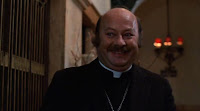 |
| Laurie Main as the Reverend Moon |
There's also Reverend Moon, the jovial tenant with a thing for refrigerator repairman, played by Laurie Main. Close your eyes and listen to his voice - he's the narrator from Winnie The Pooh, as well as the story reader on many Disney produced read-along CDs and cassettes. Watch for a brief appearance by Stanley Livingston, as well, who played Chip Douglas in the long running television sitcom
My Three Sons.
Private Parts is perverse, funny, and atmospheric, and it stands as one of my all-time favorite bargain bin finds. Be advised, though - you'll want to steer clear of the trailer prior to watching the movie, which is why I haven't provided a link to it here. Just trust me, this demented little flick is well worth
any genre fan's time, and it's truly worthy of a cult following.
Up next in the
Best Of The Big Lots Bargain Bin series:
Demon Seed (1977)
Posted by Brandon Early


